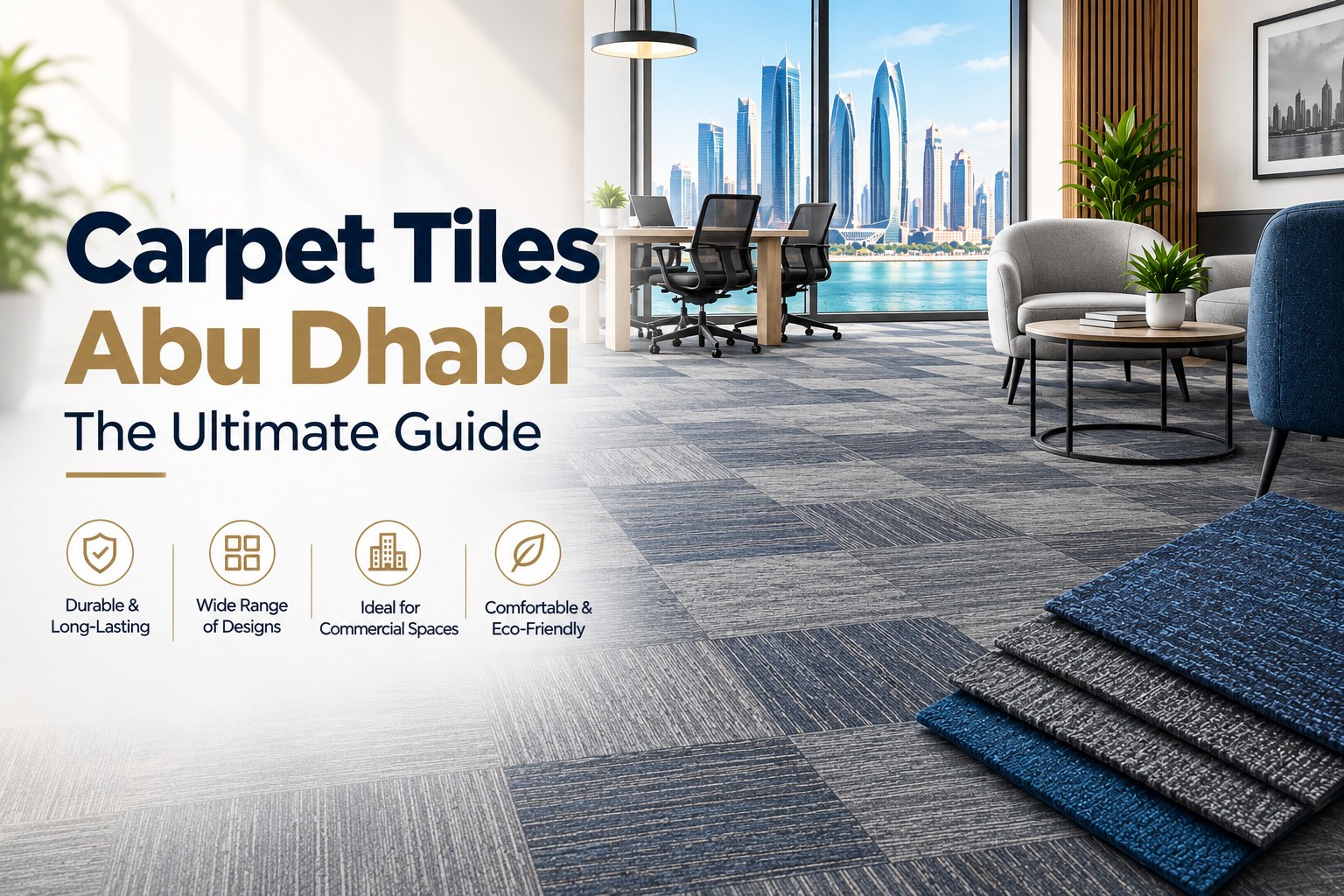

Are Carpet Tiles Abu Dhabi a better choice than traditional wall-to-wall carpet for your office? Can they really handle heavy foot traffic, stains, and everyday wear while keeping maintenance manageable?
For many commercial spaces, the answer can be yes—but only when the right type of carpet tile is selected. Modular carpet tiles come as individual pieces, allowing businesses to replace specific damaged or stained areas rather than removing the entire floor. They also offer plenty of design possibilities, from simple grey office carpet tiles to patterned layouts and contrasting colours.
Wondering which carpet tile type suits your office, how much you should expect to pay, or whether carpet tiles are durable enough for your space?
Keep reading—we’ll answer these questions and more to help you make a practical flooring decision.
What Are Carpet Tiles?
Carpet tiles are individual sections of carpet designed to be installed together to cover a floor. They are also known as carpet squares or modular carpet flooring. Instead of rolling out one large piece of broadloom carpet, installers place separate tiles across the prepared floor in a planned layout.
A carpet tile typically includes several key components:
- Carpet fibre: The material used to create the surface yarn, such as nylon, polypropylene, or polyester.
- Pile: The visible carpet surface, which may be loop, cut, or cut-and-loop.
- Backing: The layer beneath the carpet that helps provide stability and support.
- Cushioning or stabilising layers: Some products include additional layers to improve comfort, dimensional stability, or performance.
These layers affect how the tile feels, how well it stays in shape, how it handles traffic, and how easy it is to maintain.
Because the tiles are modular, they are especially useful in offices and commercial spaces where sections of flooring may need to be replaced, rearranged, or accessed later.
How Are Carpet Tiles Made?
Carpet tiles go through several stages before they are ready for installation. The exact process varies by manufacturer, but the basic steps are similar.
First, the manufacturer selects the carpet fibre. Common options include nylon, polypropylene, and polyester. Each fibre offers a different balance of durability, appearance, stain resistance, and cost.
The fibre is then turned into yarn and formed into the required pile style, such as loop pile, cut pile, or cut-and-loop construction.
Next, the carpet surface is attached to a backing system. This backing helps the tile keep its shape and remain stable after installation.
The manufacturer then adds the required colour, texture, or pattern. Depending on the product, additional treatments may also be used to improve stain resistance or other performance features.
Finally, the carpet is cut into individual modular tiles or planks.
What Sizes Do Carpet Tiles Come In?
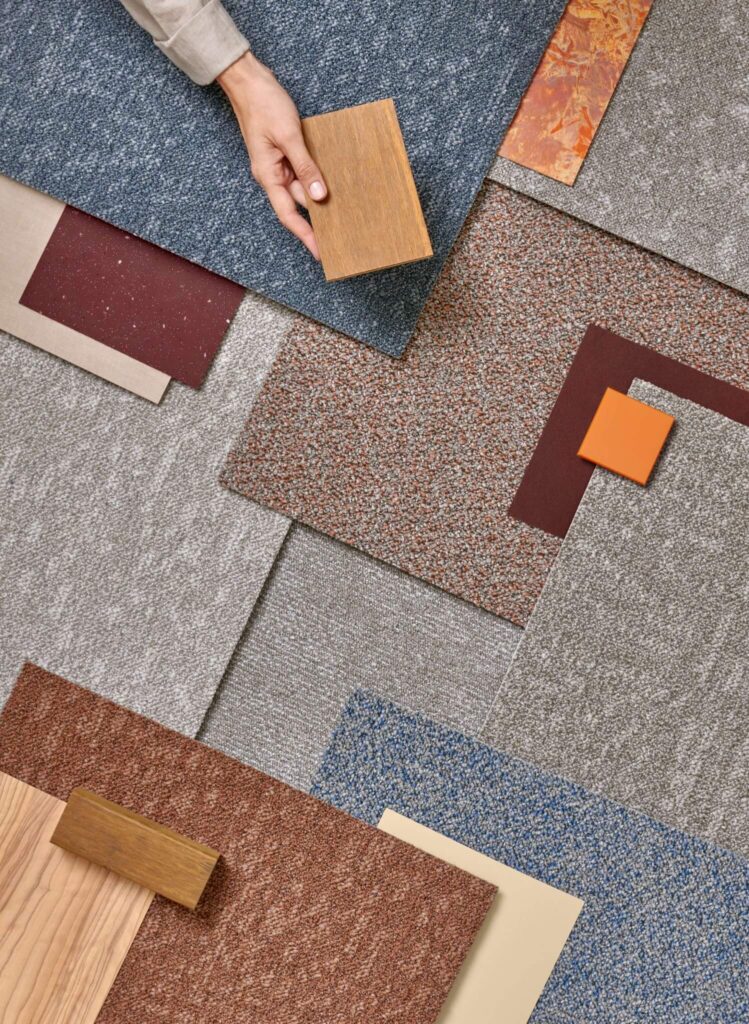
Carpet tiles are available in different sizes, so you can choose a format that works with both your floor plan and your preferred design.
The 50 × 50 cm carpet tile is one of the most common formats for commercial spaces. However, you can also find rectangular carpet planks and other modular sizes depending on the manufacturer and collection.
The size you choose can affect more than just the appearance of the floor. It can also influence installation, pattern alignment, cutting, and material waste.
For example, square carpet tiles create a clean, structured look, while carpet planks allow you to experiment with layouts such as:
- Straight or linear patterns;
- Staggered layouts;
- Herringbone-style arrangements;
- Mixed directional designs.
If the room has an unusual shape or includes several different zones, the right tile format can also make installation more efficient.
Why Are Carpet Tiles a Popular Choice in Abu Dhabi?
Carpet tiles offer more than a professional appearance. Their modular design makes them particularly useful in places where flooring has to handle everyday traffic while remaining easy to maintain.
Here are some of the main reasons businesses and property owners consider them.
Easy Tile-by-Tile Replacement
One of the biggest advantages of modular carpet is simple replacement.
If a particular tile becomes badly stained or damaged, you can remove that tile and install a replacement. You do not necessarily have to disturb the surrounding floor or replace an entire carpeted area.
Suitable for High-Traffic Areas
Office corridors, reception areas, workstations, and other shared spaces can experience heavy foot traffic every day.
A properly specified commercial carpet tile can handle regular use while maintaining its appearance. However, durability depends on the fibre, pile construction, backing, and overall product specification.
Helps Improve Acoustic Comfort
Carpet has a softer surface than many hard flooring options, which can help reduce the sound created by footsteps and everyday movement.
This can be useful in open-plan offices, meeting rooms, and shared workspaces, where controlling background noise can make the environment feel more comfortable.
Flexible Design Options
Carpet tiles give you much more freedom than simply choosing one colour for the entire floor.
You can combine different colours, textures, or patterns to create visual zones. For instance, a change in tile direction or colour can help distinguish reception areas from walkways or workstations.
Easier Maintenance
Daily maintenance becomes more manageable when the floor is divided into individual tiles.
If a small area gets stained, cleaning teams can focus on that section. When a tile is beyond practical repair, you may be able to replace it individually rather than treating the entire carpeted area.
Comfortable Underfoot
If employees spend several hours walking or standing throughout the day, a carpeted surface can provide a softer feel than many hard flooring options. That added underfoot comfort is one reason carpet tiles remain popular for offices, meeting rooms, and other workplace areas.
What Types of Carpet Tiles Are Available in Abu Dhabi?
Carpet tiles can differ by fibre, pile construction, texture, and design. Let’s look at the most common options and where each one can work well.
Nylon Carpet Tiles
Nylon is one of the most popular choices for commercial carpet flooring because it offers good durability and resilience. It can handle repeated foot traffic and recover well from everyday compression, making it suitable for demanding areas.
Polypropylene Carpet Tiles
Polypropylene carpet tiles, also known as PP or olefin, can be a practical option when budget and stain resistance are important considerations.
They may suit moderate-traffic areas and projects where keeping the flooring cost under control is a priority.
That said, not every polypropylene carpet tile performs the same way. Construction and product specifications can make a significant difference.
Polyester Carpet Tiles
Polyester carpet tiles are another synthetic flooring option. They can offer attractive colours, a comfortable feel, and useful stain-resistance characteristics depending on the product.
They may be suitable for spaces where appearance and everyday comfort are important. However, they may not be the first choice for every heavy-duty commercial application.
Loop Pile Carpet Tiles
In loop pile carpet tiles, the yarn forms loops across the surface instead of being cut.
This construction is widely used in commercial interiors because it can provide a practical, durable surface while helping everyday marks and footprints blend into the overall texture.
Cut Pile Carpet Tiles
Cut pile carpet tiles have yarn loops that are cut to create a softer and more plush surface.
Compared with many loop constructions, cut pile can give a room a warmer and more refined appearance. That’s why it can be suitable for spaces where comfort and presentation are priorities.
Cut-and-Loop Carpet Tiles
As the name suggests, cut-and-loop carpet tiles combine both cut and looped yarns.
This combination creates differences in height and texture, allowing manufacturers to produce subtle patterns without relying entirely on printed designs.
Best Spaces to Use Carpet Tiles in Abu Dhabi
A single carpet tile specification may not be ideal for every part of an office. Reception areas, corridors, meeting rooms, and private offices all have different requirements.
Here is how you can approach each space.
Carpet Tiles for Open-Plan Offices
Open-plan offices usually need flooring that can handle regular movement while helping create a comfortable working environment.
Carpet tiles can work well here because you can combine practical performance with flexible designs. Different colours or patterns can also help visually separate workstations, walkways, and collaboration areas.
Meeting and Conference Rooms
Meeting rooms typically see less constant foot traffic than corridors, but comfort and appearance can be especially important.
A carpet tile with a softer feel and refined design can create a more welcoming setting while also helping manage everyday room noise.
Reception Areas
Your reception area creates the first impression for visitors, so the flooring needs to balance appearance and durability.
A patterned, textured, or multi-tone commercial carpet tile can add visual interest while still handling regular foot traffic.
Private Offices
Private offices usually receive less foot traffic than reception areas or corridors. This gives you more freedom when choosing the look and feel of the carpet.
For these spaces, you may prefer a softer texture or a more premium-looking design, provided it matches the practical requirements of the room.
Corridors and High-Traffic Areas
Corridors can experience some of the most concentrated foot traffic in an office. Employees, visitors, and service staff may use the same paths repeatedly throughout the day. Therefore, durability should take priority over appearance alone.
How to Choose the Right Carpet Tiles for Your Abu Dhabi Space
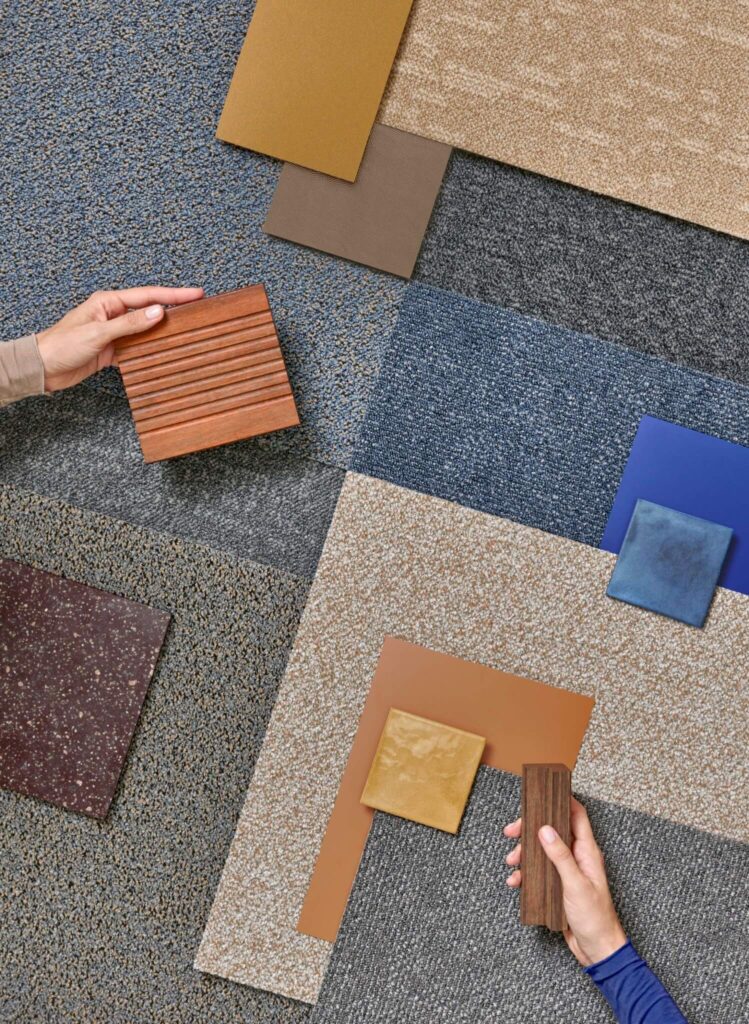
Choosing the right carpet tiles in Abu Dhabi becomes much easier when you start with the space itself.
Instead of choosing a colour first, think about how the floor will be used, how much traffic it will receive, and how much maintenance you are prepared to do.
Here are the main things to consider.
- Where will it be installed?
Identify whether it is an office, corridor, reception, meeting room, hotel, or home workspace.
- How much traffic will it receive?
Separate busy areas from spaces that receive lighter use.
- What level of maintenance can you manage?
Choose a product that fits your cleaning routine rather than creating extra work.
- What appearance do you want?
Consider colour, texture, pattern, and how the floor will work with the rest of the interior.
- What is your total budget?
Include installation and floor preparation, not just the tile itself.
- Will you need future access or replacement?
If the floor sits over a raised access system or is likely to change with the office layout, discuss this before installation.
Once you answer these questions, you can narrow down the options without getting lost in hundreds of colours and specifications.
How Much Do Carpet Tiles Cost in Abu Dhabi?
If you’re planning a flooring project, price is naturally one of the first things you’ll want to know. Carpet tiles in Abu Dhabi can typically start at around AED 35 per square metre and reach AED 120 or more per square metre for higher-quality or specialised commercial options.
The actual price depends on several factors, including:
- Carpet fibre
- Pile construction
- Backing system
- Tile quality and thickness
- Pattern or design
- Brand and collection
- Required quantity
- Intended level of traffic
For example, a basic polypropylene carpet tile for a lighter-use area may sit toward the lower end of the range. On the other hand, premium solution-dyed nylon carpet tiles or specialised commercial designs can cost considerably more.
Does Carpet Tile Price Include Installation?
Not necessarily.
When comparing carpet tile prices, check whether you’re looking at supply only or a complete supply-and-installation quotation. Installation can add to the project cost depending on the condition of the existing floor and the installation method required.
Your final quotation may include:
- Carpet tiles
- Delivery
- Installation labour
- Adhesive or tackifier
- Subfloor preparation
- Removal of existing flooring
- Cutting and wastage
- Additional site requirements
For that reason, two suppliers may quote different prices even when the carpet tile itself appears similar.
What Affects Carpet Tile Installation Cost Abu Dhabi?
The condition of the subfloor is one of the factors that can make a noticeable difference.
If the existing floor is clean, level, dry, and ready for installation, the preparation work may be relatively straightforward. However, uneven surfaces, damaged flooring, old adhesive, or existing carpet may require additional preparation or removal.
The size and complexity of the project can also affect the overall cost. A large open office with a simple layout may be easier to install than a smaller space with many rooms, corners, curves, or detailed patterns.
So, rather than focusing only on the price per square metre, ask for a complete quotation based on your actual site.
How to Get an Accurate Carpet Tile Price in Abu Dhabi
For a realistic budget, give your flooring supplier as much information as possible.
Ideally, provide:
- Approximate floor area in square metres.
- Type of space, such as office, reception, corridor, hotel, or home.
- Expected traffic level.
- Preferred carpet tile style or colour, if you already have one in mind.
- Existing floor condition.
- Whether you need supply only or supply and installation.
A site visit can make the quotation even more accurate because the supplier can assess the floor, take measurements, check access, and identify any preparation work before installation begins.
How Do You Maintain Carpet Tiles Abu Dhabi?
Once your new carpet tiles are installed, regular care will help keep them looking good and performing well.
The good news is that maintenance is fairly straightforward when you deal with small problems before they become bigger ones.
1. Vacuum Regularly
Dust, sand, and loose dirt can build up in carpet fibres, especially in busy areas.
Regular vacuuming removes this debris before it becomes embedded in the carpet. Give high-traffic areas more attention than rooms that are used less frequently.
2. Clean Spills Quickly
Accidents happen, particularly in offices where people regularly eat and drink.
When something spills, deal with it as soon as possible. Blot the affected area rather than aggressively rubbing it, and follow the cleaning method recommended by the manufacturer.
3. Use the Right Cleaning Products
Don’t assume that every carpet tile can be cleaned with the same chemical.
Different fibres, dyes, and backing systems can respond differently to cleaning products. Always check the manufacturer’s care instructions before using a new spot-treatment product.
4. Schedule Deeper Cleaning
Regular vacuuming is important, but it is not the whole maintenance routine.
Busy commercial spaces may benefit from periodic professional or deeper cleaning, depending on traffic, usage, and the manufacturer’s recommendations.
5. Replace Heavily Damaged Tiles
This is where modular carpet flooring really stands out.
If one tile becomes permanently stained or damaged, you may be able to remove and replace that individual piece instead of treating the entire floor. That makes future repairs much more manageable.
6. Keep Spare Tiles
If possible, keep a few spare tiles from the original installation.
This small step can save you a lot of trouble later. Carpet collections can change, colours can be discontinued, and matching an older tile may become difficult.
Where Can You Buy Quality Carpet Tiles Abu Dhabi?
If you’re looking for quality carpet tiles UAE, you have several options, including specialised carpet flooring suppliers, interior flooring companies, and commercial flooring contractors. However, the supplier you choose can make a big difference to the quality, cost, and long-term performance of your flooring.
A good supplier should offer more than a wide catalogue. They should help you choose a carpet tile that suits your space, provide accurate measurements, explain the installation process, and give you a clear quotation.
So, don’t choose a supplier based only on product price. Compare the quality of the flooring, installation service, product guidance, and after-sales support as well.
What Makes Royal Floors a Trusted Choice for Carpet Tiles Abu Dhabi?
When you want everything handled by one flooring partner, Royal Floors offers carpet flooring solutions for residential, office, and commercial spaces across Abu Dhabi.
The advantage is that you don’t have to figure out the product and installation separately. The team can help you through the main stages of the project, from selecting the right carpet tile to measuring the space and arranging professional installation.
Here is what you can expect when working with Royal Floors.
Quality-Focused Product Selection
We focus on flooring products selected for a combination of quality, appearance, comfort, and performance. This gives you the opportunity to compare options according to your project’s actual requirements.
Professional Guidance
Not sure whether you need nylon, polypropylene, loop pile, or another construction? A flooring professional can help narrow down the choices based on the room, expected traffic, maintenance requirements, and budget.
Site Measurement and Project Planning
Accurate measurement is an important part of any flooring project. The team can assess the space and help determine the required quantity, layout, and installation requirements before the order is finalised.
Professional Installation
Installation involves more than simply placing tiles on the floor. The subfloor needs to be suitable, the layout needs to be planned, and the tiles need to be positioned accurately so the finished floor looks consistent.
Support Beyond the Initial Purchase
Flooring is a long-term investment, so support should not stop once the tiles have been delivered. We positions its flooring services around professional measurement, installation, and finishing, with solutions for both residential and commercial spaces.
To Sum UP
Choosing Carpet Tiles Abu Dhabi is not just about finding a colour you like. You also need to think about traffic, comfort, maintenance, durability, design, and how the flooring will be installed.
The good news? You don’t have to figure it all out yourself. Royal Floors can guide you through the process—from choosing suitable carpet tiles and measuring your space to professional installation.
Have a flooring project in Abu Dhabi? Start with the right carpet tiles and let Royal Floors help bring your vision to life.
Frequently Asked Questions
What Is Low Pile Carpet?
Low pile carpet has short, closely packed fibres that create a relatively flat surface. Because the fibres are shorter, low pile carpet is generally easier to vacuum and works well in busy areas where furniture and office chairs move frequently.
What Is High Pile Carpet?
High pile carpet has longer, taller fibres that create a softer and more cushioned surface. However, it can require more maintenance and may be less convenient under rolling office chairs, making it better suited to selected residential or low-traffic areas.
What Is the Life Expectancy of Carpet Tiles?
Carpet tiles can typically last around 5 to 20 years, depending on fibre quality, foot traffic, installation, and maintenance. Generally, high-traffic commercial areas may require earlier replacement, while well-maintained tiles in lighter-use spaces can last considerably longer.
Do Carpet Tiles Need to be Glued Down?
Not always; carpet tiles can use different installation systems depending on their backing and manufacturer requirements. However, many commercial installations use adhesive or tackifier to keep tiles stable, so always follow the specified installation method for the selected product.
Do Carpet Tiles Need Professional Installation?
Professional installation is recommended for projects where accurate layout, subfloor preparation, pattern alignment, and long-term performance matter. The exact installation method depends on the selected carpet tile and manufacturer’s requirements.