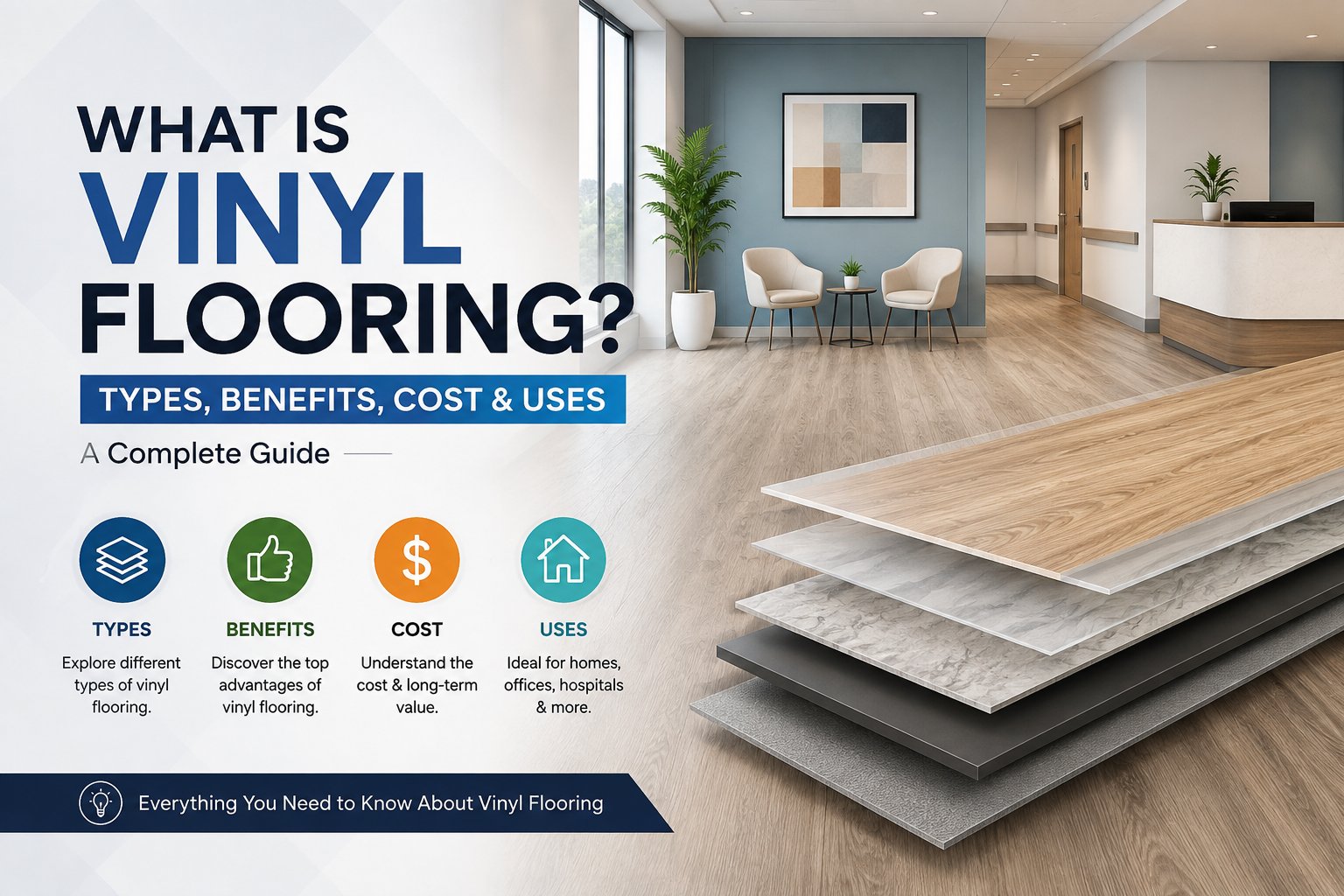

What Is Vinyl Flooring?
Vinyl flooring is a manufactured resilient floor covering based mainly on PVC, with additional materials used to create its structure, appearance and surface performance. It is available in flexible and rigid constructions and can be produced as sheets, tiles or planks.
One reason vinyl has become popular is its ability to combine a decorative appearance with the practical characteristics expected from a hard-wearing floor. Modern products can reproduce the appearance of timber, natural stone, marble, ceramic tile and other materials without using those materials as the main flooring surface.
The word “vinyl” alone, however, does not tell you exactly how a floor will perform. A basic sheet product and a high-specification rigid-core plank may both be called vinyl flooring, yet their construction, installation method, thickness, wear layer and intended applications can be quite different.
What Is Vinyl Flooring Made Of?
Most vinyl flooring is built around PVC-based material, together with layers or components that give the product its strength, design and resistance to everyday use.
A typical multi-layer vinyl floor may contain:
- Surface protection: The upper finish helps protect the visible surface from everyday marks, scuffs and wear.
- Wear layer: This transparent layer sits above the printed design and plays an important role in abrasion resistance.
- Decorative or print layer: This is where the wood, stone, tile, or other visual pattern is created.
- Core layer: The core gives the flooring its main structure. It can be flexible or rigid depending on the product.
- Backing or base layer: Some products include a backing designed to improve stability, installation, or underfoot performance.
There is no single layer arrangement that applies to every vinyl floor. Sheet vinyl, flexible LVT, LVP, and rigid-core SPC products can have different constructions.
How Is Vinyl Flooring Constructed?
Vinyl flooring is constructed by combining several functional layers into one flooring product, with each layer performing a particular job.
Think of the floor as a stack rather than as one solid piece. The bottom provides support, the core gives the product its body, the print layer creates its appearance, and the upper layers protect that appearance from everyday use.
For example, a wood-look vinyl plank may look like timber from above, but underneath the printed design is a manufactured vinyl construction. The result is a floor that can reproduce the visual character of wood while having very different material properties from genuine timber.
Some products also have textured or embossed surfaces. These can make a wood-look plank feel closer to the grain pattern shown in the design.
This construction is important when comparing products. Two vinyl floors with similar colours can have very different specifications, so the wear layer, core, total thickness, backing and installation method should be checked before buying.
What Are the Different Types of Vinyl Flooring?
The main types of vinyl flooring are sheet vinyl, vinyl tile, LVT, LVP and rigid-core vinyl products such as SPC and WPC. These names can overlap because some describe the shape of the flooring, while others describe the construction of its core.
A useful way to understand the terminology is to separate format from construction.
- Sheet vinyl describes flooring supplied in large continuous sheets.
- LVT usually refers to Luxury Vinyl Tile and focuses on the decorative vinyl flooring category.
- LVP means Luxury Vinyl Plank and normally refers to a plank-shaped vinyl product, often with a wood appearance.
- SPC describes a rigid-core vinyl construction with a mineral-filled core.
- WPC describes a rigid-core construction using a wood-polymer composite core.
So, SPC is not necessarily “another material instead of vinyl.” It is commonly a type of rigid-core vinyl flooring.
What Is LVT Flooring?
LVT stands for Luxury Vinyl Tile. It is a type of decorative vinyl flooring designed to reproduce the appearance of materials such as natural wood, stone, and ceramic tile.
The word “tile” can be misleading because LVT is not limited to a traditional square tile shape. It can be produced in different sizes and layouts, including plank-style formats and patterns such as herringbone, depending on the collection.
What Is LVP Flooring?
LVP stands for Luxury Vinyl Plank. It is vinyl flooring manufactured in a plank format, most commonly to create a wood-look floor.
The plank shape makes LVP particularly useful when the design calls for the appearance of timber boards. Depending on the collection, the surface may include printed wood grain, texture, bevelled edges, or other details intended to create a more natural visual effect.
What Is Sheet Vinyl Flooring?
Sheet vinyl is vinyl flooring supplied in large rolls or sheets instead of individual planks or tiles.
Its continuous format means there can be fewer joints across a large floor area compared with plank or tile installations. That can be useful in spaces where a more continuous floor surface is wanted.
Sheet vinyl comes in a wide range of colours and patterns. Depending on the product, it can be used in residential interiors as well as certain commercial environments.
What Is SPC Flooring?
SPC stands for Stone Plastic Composite and generally refers to a rigid-core vinyl flooring construction that uses a mineral-filled core.
The rigid core gives SPC a firmer structure than many flexible vinyl products. SPC is commonly manufactured as planks or tiles and is frequently available with click-lock installation.
The rigid construction can be useful where dimensional stability and a firm walking surface are important. SPC is also available in many wood-look and stone-look designs, making it suitable for interiors where the customer wants a decorative finish without installing natural timber or stone.
What Is WPC Flooring?
WPC stands for Wood Plastic Composite and is commonly used for a type of rigid-core vinyl flooring with a wood-polymer composite core.
WPC products are often associated with a thicker construction and a softer feel underfoot than some rigid-core alternatives. The exact feel depends on the product’s overall construction, backing, and underlayment.
Like SPC, WPC can be manufactured in plank formats with wood-look designs. It can therefore provide a decorative timber-style appearance while using a manufactured flooring construction.
What Are the Benefits of Vinyl Flooring?
Vinyl flooring can offer a useful combination of attractive designs, everyday durability, water resistance, simple cleaning and flexible installation options. These qualities make it suitable for many homes, offices, hotels and commercial interiors.
The benefits are not identical across every vinyl product, so the specification still matters.
- What Design Options Does Vinyl Flooring Offer?
Vinyl flooring offers a wide range of colours, patterns and surface designs, including realistic wood, stone, marble and tile effects.
This is one of the biggest reasons people choose vinyl. A customer can create the appearance of timber planks in a living room, a stone-inspired finish in a reception area or a patterned floor in a hospitality project without using natural stone or timber as the main flooring material.
- Is Vinyl Flooring Durable?
Many vinyl flooring products are designed to handle regular residential or commercial traffic, but durability depends on the product specification and how it is installed and maintained.
The wear layer is one important specification because it helps protect the decorative surface from everyday abrasion. A suitable commercial product may be appropriate for higher-traffic areas than a basic residential product.
- Is Vinyl Flooring Waterproof?
Some vinyl flooring products are waterproof, while others are water-resistant. The correct classification depends on the product’s construction and manufacturer testing.
Even when the flooring itself is waterproof, poor seams, open edges, or incorrect installation can allow water to reach the subfloor.
- Is Vinyl Flooring Easy to Clean?
Vinyl flooring is generally straightforward to clean because its finished surface does not require the same maintenance routine as natural timber or carpet.
A sensible maintenance routine includes:
- Sweeping or vacuuming regularly.
- Cleaning spills without unnecessary delay.
- Using cleaning products recommended for the flooring.
- Avoiding abrasive tools that can mark the surface.
- Following the manufacturer’s care instructions.
Good maintenance is simple, but it still matters. Grit and dirt can act like abrasives when repeatedly walked over the floor.
- Is Vinyl Flooring Affordable?
Vinyl flooring is available across a broad price range, making it possible to find options for different project budgets. Basic sheet products, standard vinyl products, premium LVT, and rigid-core products can have very different prices.

What Are the Disadvantages of Vinyl Flooring?
Vinyl flooring is practical, but it is not damage-proof or suitable for every situation. The main limitations involve surface damage, subfloor preparation, sunlight exposure, product quality, and the fact that vinyl cannot be refinished in the same way as solid wood.
Understanding these limitations helps buyers choose the right product instead of expecting every vinyl floor to perform in every situation.
Where Can Vinyl Flooring Be Used?
Vinyl flooring can be used in homes, offices, hotels, retail stores, and other commercial interiors when the selected product is appropriate for the space.
The same vinyl specification should not automatically be used throughout an entire building. A quiet bedroom, hotel corridor, and busy shop entrance have very different flooring requirements.
Is Vinyl Flooring Good for Homes?
Yes. Vinyl can be a practical residential flooring choice for people who want attractive designs, easy routine cleaning, and good moisture resistance from a suitable product.
Common applications include:
- Living rooms
- Bedrooms
- Hallways
- Home offices
- Kitchens
- Other suitable interior areas
For a family home, the choice may come down to design, comfort, cleaning, moisture exposure, and how much daily traffic the floor will receive.
Is Vinyl Flooring Suitable for Offices?
Yes. Commercial-grade vinyl can work very well in offices when its specification matches the space.
An office floor may have to deal with:
- Constant foot traffic
- Rolling office chairs
- Furniture movement
- Frequent cleaning
- Meeting-room use
- Reception traffic
- Acoustic requirements
A quiet private office does not necessarily need the same specification as a reception area used by hundreds of visitors.
Is Vinyl Flooring Suitable for Hotels?
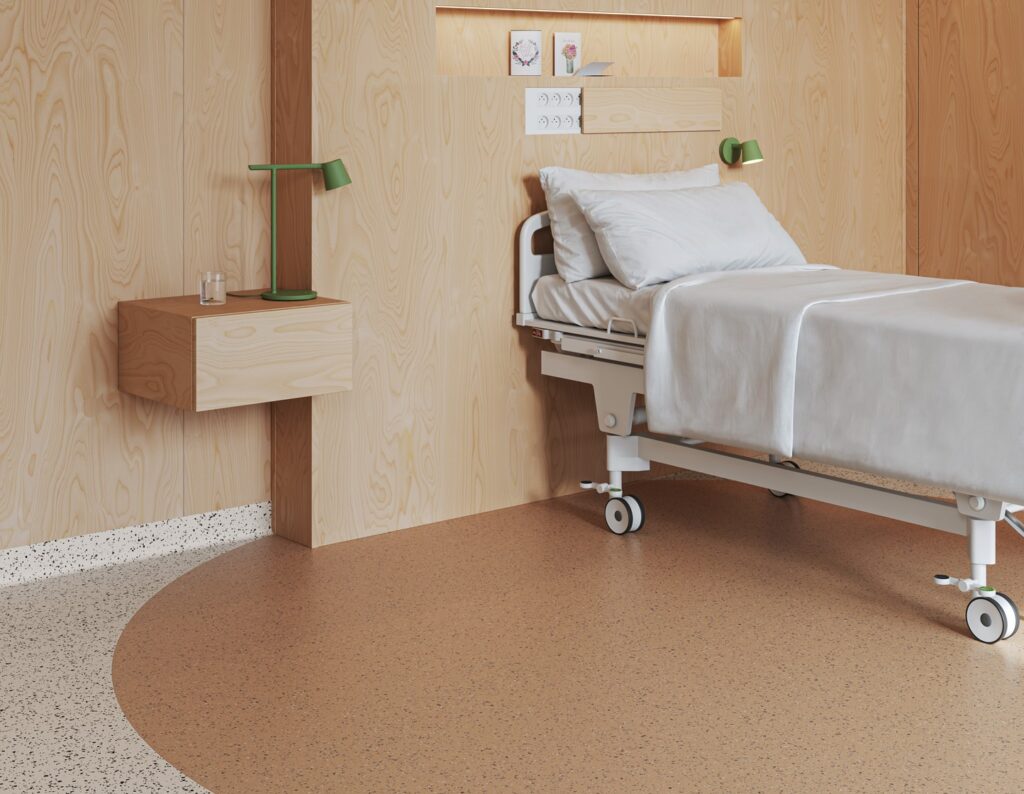
Yes. Vinyl flooring can be used in hotels and other hospitality spaces, including selected guest rooms, corridors, reception areas and public spaces.
Hotel flooring needs to cope with more than ordinary foot traffic. Cleaning frequency, appearance, rolling luggage, furniture movement and the desired guest experience can all influence the specification.
Is Vinyl Flooring Suitable for the UAE?
Yes. Vinyl flooring can be a suitable choice for UAE homes, offices, hotels, and commercial properties when the product and installation system are matched to the project.
There is no single “UAE vinyl flooring” specification that works for every building. The right product depends on the interior environment, traffic, moisture exposure, subfloor, and intended use.
What Should UAE Buyers Consider When Choosing Vinyl Flooring?
UAE buyers should compare the flooring specification and installation requirements rather than choosing vinyl only because it looks good or has a low price.
Before purchasing, consider:
- Property type: Is it a villa, apartment, office, hotel, or retail space?
- Traffic: Will a few people use the room, or will there be constant movement?
- Moisture: Is the floor likely to encounter spills or regular moisture?
- Vinyl construction: Is flexible LVT, LVP, SPC, WPC, or sheet vinyl more appropriate?
- Wear specification: Does the product match the expected traffic?
- Installation: Is glue-down, click, or another system appropriate?
- Existing floor: Is the subfloor flat, clean, and stable?
- Maintenance: What cleaning routine will the building require?
- Sunlight: Will strong direct sunlight reach the floor for long periods?
- Warranty: What does the manufacturer’s warranty actually cover?
Vinyl Flooring vs Other Flooring Options
Vinyl flooring is not automatically better than every other flooring material. It becomes a strong option when its particular strengths—such as design choice, moisture resistance, maintenance, and resilient construction—match the project’s needs.
Vinyl vs Laminate: Which Is Better?
Vinyl is often the stronger choice when moisture resistance and easy cleaning are important, while laminate can be a good option when its specific appearance, construction, and budget fit the project.
| Factor | Vinyl | Laminate |
| Moisture | Many water-resistant options; some are waterproof | Water performance varies by product |
| Design | Wood, stone, tile, and patterns | Primarily wood and decorative designs |
| Underfoot feel | Varies by construction | Generally firmer |
| Installation | Product-dependent | Often floating |
Vinyl vs Wood: Which Is Better?
Choose vinyl when easy maintenance, moisture resistance and consistent appearance are priorities; choose natural wood when genuine timber character and the ability to refinish the floor are important.
Vinyl can reproduce the appearance of oak, walnut and other timber styles without being made from natural wood.
Natural wood, however, has something manufactured flooring cannot completely reproduce: natural variation. Grain, knots, colour changes and the feel of genuine timber are part of the material itself.
Wood can also be refinished when the construction and condition allow it. Vinyl normally cannot be sanded and refinished in the same way.
The better choice depends on what matters most to the project.
Vinyl vs Carpet: Which Is Better?
Vinyl is generally more suitable when easy hard-surface cleaning and moisture resistance matter, while carpet is often the better fit when softness, warmth, and sound absorption are major priorities.
| Requirement | Vinyl may suit when… | Carpet may suit when… |
| Cleaning | Easy hard-surface cleaning matters | Regular carpet maintenance is acceptable |
| Comfort | A resilient hard surface is preferred | Softness is important |
| Acoustics | Product-specific acoustic performance is sufficient | Sound absorption is a priority |
| Moisture | Water resistance is important | Moisture exposure is low |
LVT vs SPC: What’s the Difference?
LVT and SPC are both associated with vinyl flooring, but their construction is different. LVT commonly refers to luxury vinyl flooring, while SPC identifies a rigid-core vinyl product with a mineral-filled core.
| Factor | LVT | SPC |
| Core/construction | Flexible vinyl construction in many products | Rigid mineral-filled core |
| Feel | Generally softer or more resilient | Generally firmer |
| Installation | Product-dependent; glue-down and click options exist | Often click-lock, depending on product |
| Dimensional stability | Product-dependent | Rigid-core construction generally provides strong stability |
How Do You Choose the Right Vinyl Flooring?
Choose vinyl flooring by starting with the room and its daily use, then match the product’s construction, wear specification, moisture performance, and installation method to those conditions.
A useful buying process is:
1. Where Will the Floor Be Installed?
Start with the property.
A bedroom, hotel corridor, office reception, and retail shop have very different flooring needs. Tell the flooring supplier exactly where the product will be used.
2. How Much Traffic Will It Receive?
Think about the number of people using the area and the type of movement involved.
A family bedroom is very different from a hotel lobby. An office with rolling chairs also places different demands on the floor.
3. How Much Moisture Will the Floor Encounter?
If spills or moisture are likely, check whether the selected product is water-resistant or specifically rated waterproof.
4. Which Appearance Do You Want?
Vinyl can imitate:
- Oak and other wood styles
- Marble
- Natural stone
- Ceramic tile
- Concrete
- Decorative patterns
The design should suit the rest of the interior rather than being chosen separately from it.
5. Which Installation System Fits the Project?
Your options may include glue-down, click-lock, loose-lay, or sheet installation.
The existing floor and the product specification will help determine which system is appropriate.
6. What Is the Wear Specification?
Look at the wear layer and the manufacturer’s intended-use recommendation.
For commercial projects, this step is especially important.
7. What Is the Existing Subfloor Like?
Before ordering flooring, inspect the base.
Is it level? Is it clean? Are there cracks, loose tiles, moisture problems, or other defects?
A beautiful vinyl floor cannot compensate for a poor foundation.
8. What Maintenance Will Be Required?
Ask how the product should be cleaned and whether the manufacturer has specific restrictions on cleaning chemicals or equipment.
9. What Is the Complete Project Budget?
Do not compare flooring prices by material cost alone.
Installation, preparation, adhesive, accessories, skirting, transitions, and removal of an existing floor can all affect the final project cost.
10. Who Will Install It?
Correct installation is part of flooring performance.
For a large home, office or hotel project, professional site assessment and installation can help identify issues before they become expensive problems.
How Much Does Vinyl Flooring Cost in the UAE?
As a general UAE market reference, vinyl flooring projects can fall roughly within AED 40–170+ per m² for supply and installation, but the actual quotation can be lower or higher depending on the product and site conditions.
For example, a room with a clean, level, and ready-to-use floor can be much simpler to price than a project where the existing surface needs repair and levelling first.
The best way to get a useful quotation is to provide:
- Total floor area in m²
- Property type
- Room or project location
- Preferred vinyl style
- Existing floor type
- Condition of the existing floor
- Intended use of the space
A professional quotation should make clear what is included in the price—material, installation, preparation, accessories, and finishing.
Frequently Asked Questions
- Is Vinyl Flooring Comfortable Underfoot?
Vinyl can feel comfortable and resilient underfoot, but the feel changes between products. Flexible LVT, cushioned vinyl, SPC, and WPC can have noticeably different levels of firmness and cushioning.
- Can Vinyl Flooring Be Installed Over Tiles?
Yes, vinyl can sometimes be installed over existing tiles if the tile surface is suitable for the selected product and installation method. The existing floor may need to be cleaned, repaired, levelled, or otherwise prepared before installation.
- Is Vinyl Flooring Water Resistant?
Yes, vinyl products provide good water resistance, and some are specifically rated as waterproof, but the level of protection depends on the product and installation system.
- Can Vinyl Flooring Scratch or Dent?
Yes. Vinyl can be scratched, scuffed, or dented by sharp objects, heavy furniture, impacts, and dragging. A suitable wear layer improves resistance to everyday wear, but no vinyl floor should be treated as completely damage-proof.
- Does Vinyl Flooring Require a Suitable Subfloor?
Yes. A suitable subfloor is important for a successful vinyl flooring installation. The base should generally be clean, stable, and sufficiently level for the selected product and installation system. Uneven areas can become visible after installation and may affect the floor’s performance.
- Is All Vinyl Flooring the Same Quality?
No. Vinyl flooring can vary considerably in thickness, wear layer, core construction, backing, surface treatment, and intended use. Two products that look similar can have very different performance specifications.
- Is Vinyl Flooring Better Than Laminate?
Neither is automatically better. Vinyl can be a stronger choice when moisture resistance and easy cleaning are priorities, while laminate may be preferred for certain dry areas, designs, construction types, or budgets.
- How Long Does Vinyl Flooring Last?
Vinyl flooring does not have one universal lifespan. Its service life depends on product quality, wear-layer specification, traffic, installation, subfloor preparation, cleaning, and general care.
Conclusion: Is Vinyl Flooring a Good Choice?
Vinyl flooring can be an excellent practical option for many residential, office, hotel, and commercial interiors, particularly when design flexibility, maintenance, and water resistance are important. But the best vinyl flooring depends on the specific application.
Planning a vinyl flooring project in the UAE? Contact Royal Floors to discuss your flooring project, explore suitable vinyl flooring options, and request product guidance or a quotation for your UAE property.